Book Appointment Now


The “Big Stuff” Dilemma: How to Dispose of Sofas, Fridges, and Mattresses in Islington?
We have all experienced that moment of excitement when a new sofa, fridge-freezer, or mattress is on its way. But just as quickly, reality sets in: what happens to the old one? In a densely populated borough like Islington, getting rid of bulky household items is rarely straightforward.
From tight staircases in Victorian conversions around Canonbury to strict enforcement against fly-tipping near Angel and Highbury, disposing of oversized waste requires careful planning. Here is your complete guide to handling bulky items in Islington safely, legally, and without unnecessary stress.
Why Is Leaving Bulky Items on the Pavement a Serious Risk?
It may seem harmless to place an old mattress or sofa outside with a “free” sign attached. However, in most cases, this is considered fly-tipping if it has not been arranged through an official collection.
Islington Council actively monitors streets such as Upper Street, Essex Road, and surrounding N1 areas. Once an item is left unattended, it often attracts additional rubbish.
Rain quickly damages soft furnishings, making them unsuitable for reuse or charity collection. If an investigation traces the waste back to your property, you could face enforcement action and a substantial fine.
Beyond the legal risk, there is also a community responsibility. Bulky waste left outside blocks pavements, creates hazards for pedestrians, and undermines the appearance of local neighbourhoods.
What Makes Furniture Removal in Islington Particularly Difficult?
Islington’s charm lies in its period architecture. Many homes are multi-storey townhouses or converted flats with narrow stairwells, tight hallways, and sharp turns. These features make moving large furniture far more complex than in modern properties.
Attempting to move bulky items yourself often results in:
- Scratched walls and damaged paintwork
- Broken banisters or chipped plaster
- Strained backs or muscle injuries
- Lost rental deposits due to property damage
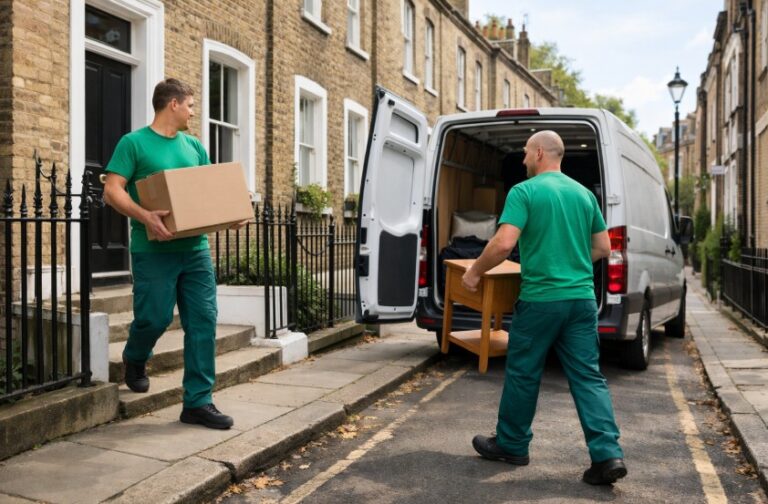
A king-size mattress or large corner sofa rarely fits neatly through standard doorways. Professional clearance teams are trained in manoeuvring techniques, carefully pivoting and angling items to protect both the furniture and your property.
More importantly, they collect items directly from whichever floor they are located on, eliminating the need for you to drag them to the street.
Are Fridges and Freezers Really Hazardous Waste?
Many people are surprised to learn that fridges and freezers cannot simply be taken to a scrap yard. These appliances are classified under Waste Electrical and Electronic Equipment (WEEE) regulations.
Older refrigeration units contain substances such as CFCs or HCFCs within their cooling systems and insulation foam. These gases must be safely removed at specialist facilities to prevent environmental damage.
Proper fridge disposal involves:
- Safe degassing of cooling systems
- Removal and treatment of hazardous components
- Recycling of metal, plastic, and insulation materials
Using a licensed waste carrier ensures your white goods are processed at approved facilities in full compliance with environmental law. This protects you from liability and ensures responsible recycling.
Why Are Mattresses So Difficult to Dispose Of?
Mattresses are often described as “nightmare waste” for a reason. They do not compact easily in landfill and can take decades to decompose. Across the UK, hundreds of thousands of tonnes of mattresses are discarded annually, placing pressure on landfill capacity.
Recycling facilities now dismantle mattresses into their component parts:
| Component | How It Is Recycled or Reused |
| Steel springs | Melted and reused in new metal products |
| Foam padding | Repurposed for carpet underlay or insulation |
| Fabric covers | Processed for energy recovery or textile recycling |
Choosing a service that prioritises mattress recycling reduces environmental impact and supports the circular economy.
Is Council Collection Always the Best Option?
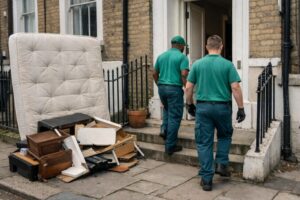
Islington Council offers a bulky waste collection service, which can be cost-effective. However, there are important considerations.
Council collections typically require:
- Advance booking, sometimes weeks ahead
- Items to be placed outside at ground level
- Specific collection days without flexibility
If you live in an upstairs flat or require precise timing to coincide with a new delivery, this can create logistical challenges. No one wants to sleep on the floor waiting for a mattress collection slot.
Private clearance services often provide same-day or next-day appointments. This flexibility allows you to coordinate removal with furniture delivery, ensuring a smooth transition.
How Can You Time Bulky Waste Removal Effectively?
Timing is often the biggest concern. The ideal scenario is simple: old item out, new item in, with no disruption in between.
Planning ahead helps you avoid:
- Storage issues inside the property
- Blocked hallways and living spaces
- Delays in assembling new furniture
- Potential complaints from neighbours
A professional two-person collection team can arrive within a set time window and remove the old item immediately before or after delivery of the new one. This approach keeps your home functional and clutter-free.
What Items Commonly Require Bulky Waste Collection in Islington?
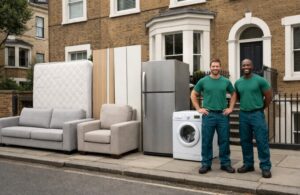
Large household items frequently collected across N1, N5, and EC1 include:
- Living Room Items: Sofas, armchairs, coffee tables, TV units, shelving systems.
- Kitchen Appliances: Fridges, freezers, washing machines, dishwashers, ovens.
- Bedroom Furniture: Mattresses, bed frames, wardrobes, chest of drawers.
- Outdoor Items: Dismantled garden sheds, trampolines, old barbecues, patio furniture.
While each item presents different disposal requirements, the key is ensuring it is handled legally and responsibly.
Why Is Using a Licensed Waste Carrier Important?
When arranging bulky waste removal services in Islington, always verify that the company is registered with the Environment Agency as a licensed waste carrier.
This ensures:
- Legal transportation of waste
- Proper recycling and disposal routes
- Protection from fly-tipping liability
- Issuance of waste transfer documentation
If your waste is illegally dumped and traced back to you, the responsibility may still fall on the homeowner unless you can prove it was handed to a licensed carrier.
Let Professionals Handle the Heavy Lifting
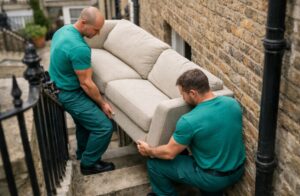
Disposing of bulky items in Islington does not need to become a logistical headache. With the right approach, you can avoid fines, protect your property, and ensure environmentally responsible recycling.
A professional two-person collection service handles everything: lifting from upstairs flats, careful manoeuvring through narrow staircases, secure loading, and compliant disposal.
Instead of worrying about how to get that sofa through the door or where to take your old fridge, arrange a scheduled collection that fits around your delivery timetable. Proper planning turns a potentially stressful situation into a seamless upgrade for your home.